
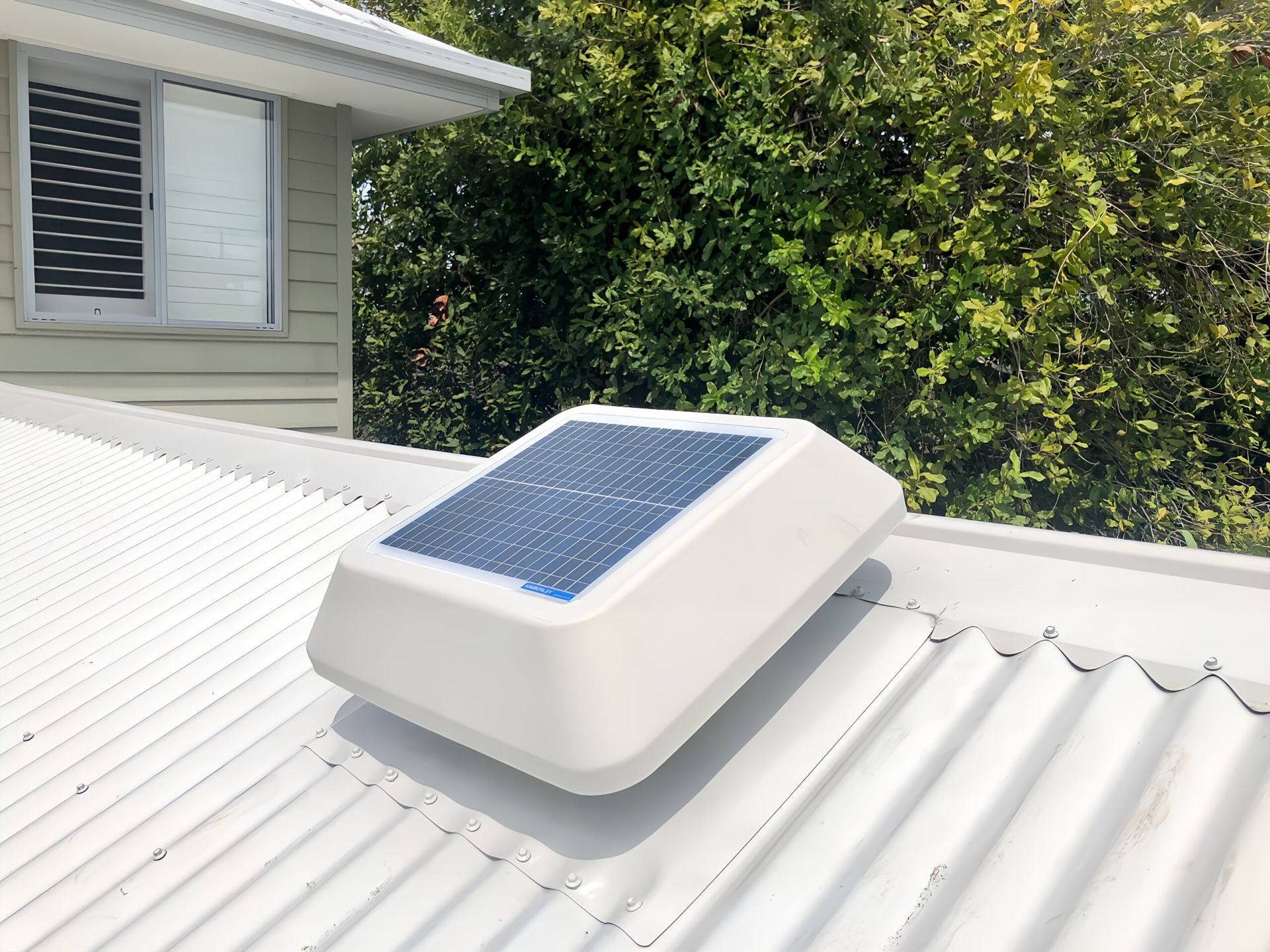
Sol Coast Construction supplies and installs the Australian-made Kimberley KSV300 solar roof ventilator in Buderim and the surrounding suburbs, on Colorbond and tiled roofs, from $900 installed. It runs on sunlight, so it works hardest when your roof is hottest, and it goes into the same opening as most whirlybirds. Licensed carpenter, QBCC licensed and insured, Kimberley warranty of 24 months on the motor and 5 years on the chassis, fixed written quote before any work starts.
Rated 5.0 from 95 Google reviews. The full product detail, the whirlybird comparison and fifteen answered questions are on our solar roof ventilator page; this page is about Buderim.
Why Buderim roofs need a powered vent
Buderim sits on a plateau roughly 180 metres above the coast, and the trade-off for the views and the cooler nights is a lot of tree cover and a lot of rain. Two things follow for a roof. First, the established homes on the escarpment, many of them tiled with large, deep roof spaces, hold heat on a still day just as a coastal roof does; the plateau breeze is not reliable enough for a whirlybird to count on. Second, the moisture. Buderim roof cavities stay damp in the wet months, and a cavity that never properly dries is where mould and musty ceilings start. A Kimberley KSV300 purges the cavity every sunny day, which is the only cure that does not involve chemicals.
Shade is the Buderim question we answer most. A solar ventilator must see the sun, so on a treed block the unit goes on the north-facing slope in the clearest position, and we confirm that on the day rather than guessing from a map. If a whirlybird is sitting under a jacaranda on the south side, we leave the opening sealed and put the KSV300 where it will work.
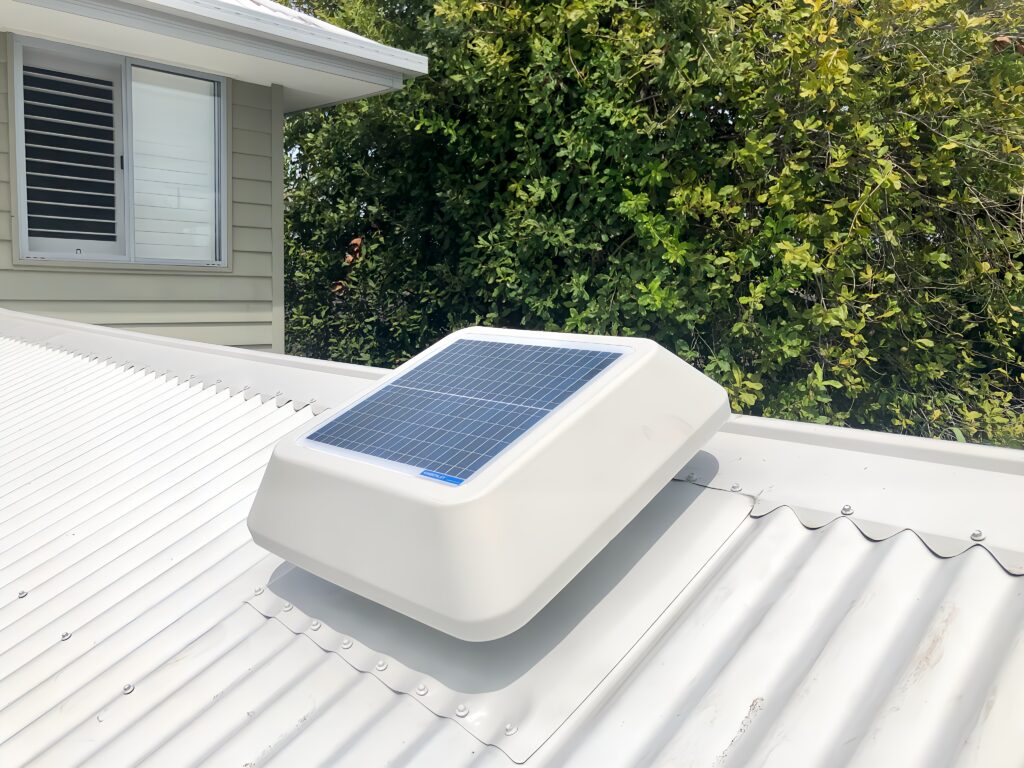
The Kimberley KSV300 in brief
- Runs on sunlight. Brushless DC motor on a built-in solar panel, no wiring, no running cost. The optional AC model adds mains power for night running.
- Thermostat controlled. Starts at about 28 °C in the roof cavity, stops at about 20 °C, so it never pulls warmth out in winter.
- Covers up to 240 m² of floor area under the roof. Larger homes take two.
- Built for the coast. Galvanised chassis, tempered-glass panel, nylon fan, IP68 motor. Black or white, same price.
- Whirlybird swap. Fits the existing opening when the whirlybird faces north; otherwise we fit it on the north slope and close or cap the old opening. The old unit leaves with us at no extra cost.
- Warranty. Kimberley: 24 months on the motor, 5 years on the chassis. Sol Coast warrants the workmanship.
What it costs in Buderim
A Kimberley KSV300 supplied and installed starts from $900. Tiled roofs are common on the plateau and add to the price, as do a second storey, a second unit or a ducting kit, and every quote is written and fixed before we start. We quote from your details, so tell us the roof type and whether the block is heavily treed.
Also serving
Mountain Creek, Sippy Downs, Forest Glen, Tanawha, Kuluin, Mons and Alexandra Headland. We install across the Sunshine Coast from Gympie to Bribie Island and North Brisbane: see also North Brisbane, Maroochydore, Nambour, Mooloolaba, Birtinya, Caloundra.
What customers say
“No question is too silly, no request too much and he doesn’t sales pitch you but give sound advice sometimes doing himself out of a job.” Belinda Hayes, Google review
“Michael just installed a solar heat extractor in our living room and previously an extension ladder to our ceiling in the garage. Both times he was extremely efficient and personable.” Mark Hayes, Google review
Read all our reviews on Google
Buderim solar roof ventilation questions
My Buderim block has big trees. Will a solar roof vent still work?
Short answer: Yes, if the panel sees the sun. We fit the unit on the north-facing slope in the clearest position and confirm it on the day.
Detailed: The KSV300 needs direct sun on its panel. Dappled shade for an hour or two slows it; a roof fully under the canopy is not a candidate, and we will tell you so rather than install something that disappoints. Most Buderim roofs have a clear northern slope and we use it.
Will it help with mould and a musty roof space in Buderim?
Short answer: Yes. The thermostat runs the fan whenever the cavity is warm, so moisture is purged every sunny day instead of sitting there.
Detailed: Damp roof spaces are a Buderim and hinterland problem more than a beach one. Moving air through the cavity daily is what keeps timber, insulation and plaster dry; a whirlybird only does that when the wind cooperates.
Buderim nights are cool. Does the vent pull warmth out in winter?
Short answer: No. The KSV300's thermostat switches it off below about 20 °C, so on a cold Buderim morning it stays off and the roof keeps its warmth.
Detailed: That is the main difference from a whirlybird, which spins on every windy winter night and drags heated air out of the house. The solar unit only runs when the cavity is actually warm.
Can you install on an older tiled roof in Buderim?
Short answer: Yes. We lift a few tiles, fix the unit to the battens, trim the tiles back around the base and seal the edges.
Detailed: Tiled roofs are the norm on the established Buderim streets and are a routine install. The unit's malleable base sits under the trimmed tiles and the joints are sealed, and we warrant the workmanship as a QBCC-licensed contractor.
Replacing a whirlybird? Our guide to whirlybird replacement on the Sunshine Coast walks through the swap. A roof screw replacement or a Kimberley attic ladder is easily done on the same visit.