
Blog ·
The Best Attic Ladder for a Sunshine Coast Home: A Buyer's Guide
Most Sunshine Coast homes have a large, empty space above the ceiling and nowhere to put the camping gear, suitcases and Christmas boxes. An attic ladder turns that space into storage for a fraction of the cost of a shed or a renovation, with no permit and no change to the house's footprint. The catch is that attic ladders vary a lot, and the wrong one is heavy to open, hot to stand under, or simply does not fit between the trusses.
This guide covers what to look for, what the install involves, and when a ladder is not the right answer. Sol Coast Construction installs Australian-made aluminium attic ladders across the Sunshine Coast and North Brisbane. We are QBCC licensed and insured, with over 25 years in the industry, and a Kimberley Products accredited installer.
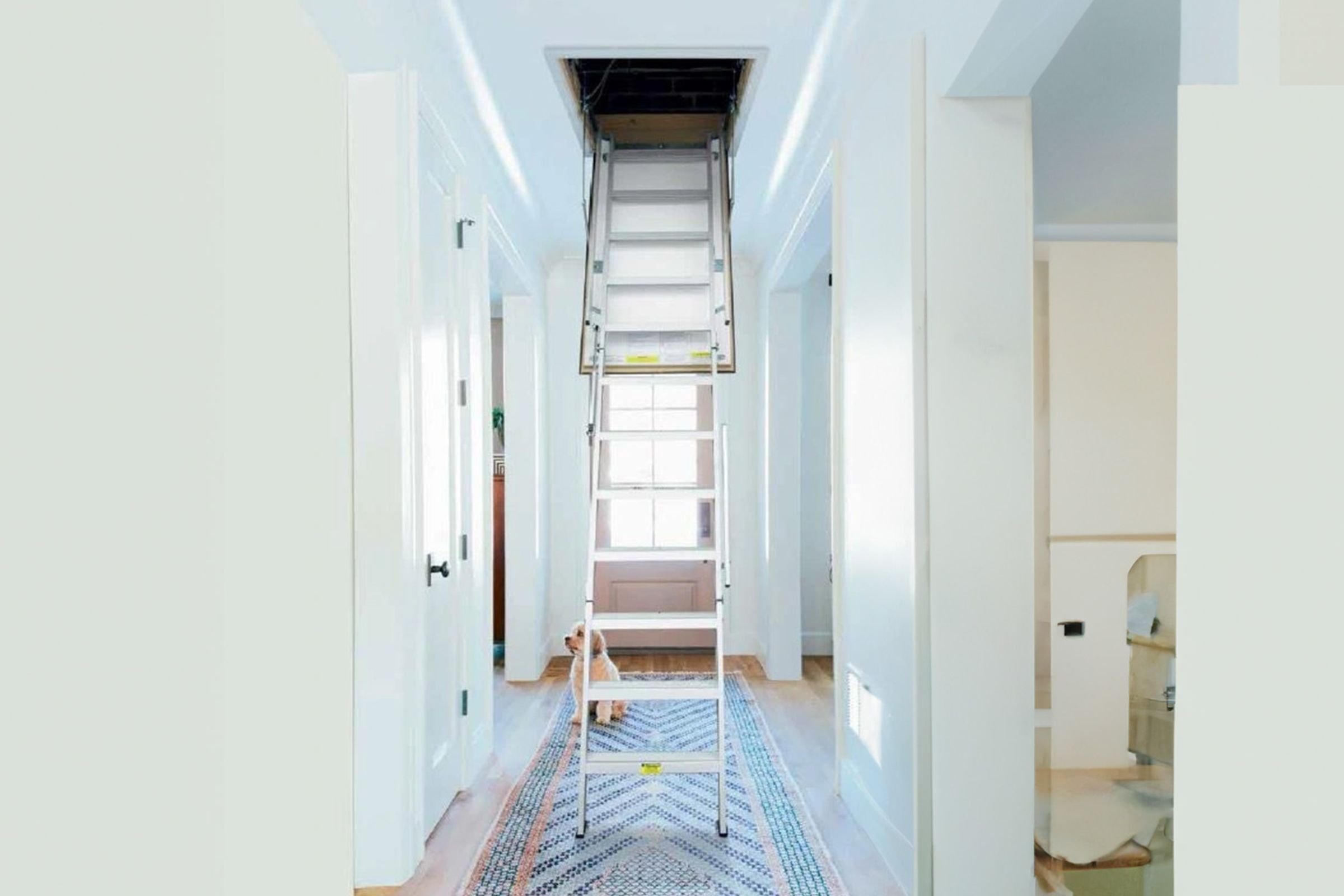
Start with the house, not the ladder
Three measurements decide which ladder suits your home, and we take them free of charge before we quote.
- Ceiling height. Ladders are built for a range of floor-to-ceiling heights. Too short and the feet never reach the floor properly; too long and the angle is steep. Queensland homes with 2.7 m or raked ceilings need a ladder specified for that height, not a standard unit stretched to fit.
- Landing space. A folding ladder swings down and out. The floor in front of the hatch needs clear room for the ladder to open and for you to step on and off safely, which is why a hallway or garage is usually the best spot and a bedroom corner usually is not.
- Truss spacing. The hatch has to fit between the roof trusses without cutting them. Premium ladders are designed around standard truss spacing; where the spacing is unusual we will tell you what fits rather than what you hoped would.
We also check the roof space itself: the height at the ridge, where the insulation and wiring run, and whether there is enough clear area above the hatch to be worth flooring.
What makes a good attic ladder
- Aluminium, Australian made. Light to lift, does not rust in coastal air, and does not swell or warp in a humid roof space the way timber can. Our ladders are Australian-made by Kimberley Products and carry a five-year warranty.
- Load rating of 150 kg. That is a person plus a box of books. Check the rating on anything you are offered; cheaper imported ladders are often rated lower.
- Gas struts. The difference between a ladder you use every week and one you avoid. Gas struts and springs make the hatch open with little effort and close itself gently for the last part of the travel.
- A handrail. Entry and exit at the top is where people slip. A fixed handrail turns a careful climb into a routine one.
- An insulated hatch. The hatch is a hole in your ceiling. An insulated, sealed hatch keeps summer roof heat out of the house and winter warmth in, which matters more here than almost anywhere in Australia.
- Rubber feet. Hardened rubber feet mean the ladder sits on an epoxy garage floor, tiles or timber without scratching or marking.
- A generous opening. Ours is 550 x 1200 mm, which is wide enough to pass a suitcase or a storage tub up without turning it sideways.
Compact and extra-wide options
Narrow hallways and homes with limited clearance suit a compact ladder with a smaller hatch and a tighter fold. Where the landing space is generous and the roof will be used often, an extra-wide ladder is easier to carry larger items up. We choose between them on the measurements above, not on what is in stock.
Where to put it
The best location has a clear floor below, a usable roof space above, and is where you will actually store things. For most Sunshine Coast homes that is the garage or a hallway. Garages are the easy win: concrete floor, high ceiling, nothing to move. A hallway brings storage closer to the bedrooms but needs the landing space checked carefully.
Flooring the roof space
A ladder gives you access; flooring gives you storage. We floor out a section of the roof space by the square metre, laid so it can be lifted again if an electrician or plumber ever needs to reach services underneath. Flooring is the single upgrade customers tell us they wish they had done at the same time as the ladder. One of our customers had us install a ladder and 20 square metres of flooring together and said the job "was completed smoothly in two days" and would have taken him weeks on his own.
What the install involves
A professional install takes a few hours for the ladder alone, longer with flooring. We cut and frame the hatch between the trusses, fit the ladder, seal and insulate the hatch, test the struts and the fit of the feet to the floor, remove the old materials, and show you how to open and close it. The ceiling is finished so the hatch looks like it was always there. As with every Sol Coast job, we work off drop sheets and leave the area clean.
When an attic ladder is not the answer
We will say so if the roof space is too low to stand in, if the only possible hatch location has no safe landing below it, or if the trusses are too close together for anything but a compact unit that will frustrate you. In those cases the money is better spent elsewhere, and we would rather tell you that at the measure-up than after the install.
Cost
An attic ladder is one of the cheapest ways to add usable space to a home. The price depends on the ladder model, the ceiling height and whether you add flooring. Every Sol Coast quote is written and fixed before we start, with no surprises on the day. Ask for one through the contact page, or see what is included on our attic ladders page.
Quick answers
Can I have an attic ladder installed in my home?
Short answer: Almost certainly. We measure the ceiling height, landing space and truss spacing for free and tell you what fits.
Premium ladders are designed to sit between standard trusses without cutting them. Unusual spacing, raked ceilings and tight hallways narrow the choice; they rarely rule it out.
Are attic ladders safe?
Short answer: Yes. Ours are Australian-made aluminium, rated to 150 kg, with a handrail and gas struts.
The 550 x 1200 mm opening gives clear room to carry items up, and rubber feet keep the ladder steady on any floor.
Will an attic ladder let heat into the house?
Short answer: Not with an insulated, sealed hatch.
The hatch is a hole in the ceiling; a sealed, insulated hatch closes it as well as the ceiling around it. Pair it with a solar roof ventilator if the roof space itself runs hot.
How long does an attic ladder installation take?
Short answer: A few hours for the ladder; add time for flooring.
A ladder with a large flooring area can run to two days. We confirm the time on the quote.
Can you floor the roof space as well?
Short answer: Yes, by the square metre, and it can be lifted again to reach services.
Flooring turns access into storage and is cheapest to do at the same time as the ladder.